About Me
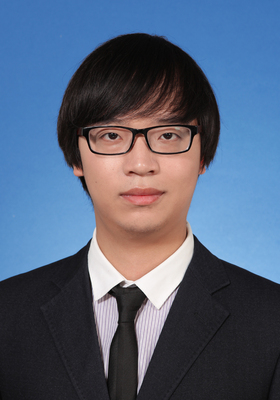
Zhewei Yao is a principal scientist and research manager at Snowflake AI Research, where he was a founding member of the Snowflake AI/ML team. His work spans the stack of enterprise AI: long-context training and efficient inference, post-training and reinforcement learning, and the text-to-SQL and agentic systems built on top, much of which ships inside Snowflake Intelligence, Cortex Code and Snowsight. Before this, Zhewei was a principal researcher and tech lead manager at Microsoft from 2021 to 2023, where he was a core contributor to DeepSpeed. He obtained his Ph.D. degree from University of California at Berkeley, where he was a Ph.D. researcher in BAIR, RISELab (former AMPLab), BDD, and Math Department. He was advised by Michael Mahoney, and he worked very closely with Kurt Keutzer. His research interests center on foundation model training and inference across both MoE and dense models, spanning pre- and post-training data curation, RL training, agentic systems, model-system co-design, and inference optimization. Before joining UC Berkeley, he received his B.S. in Math from Zhiyuan Honor College at Shanghai Jiao Tong University (last update 8/19/2026).
Working Experience
Snowflake AI Research — Principal Scientist and Research Manager, Nov 2023-present
- Foundation models and training systems — co-led the model-system co-design behind Snowflake Arctic, a 480B Dense-MoE hybrid with 17B active parameters released under Apache 2.0; initiated and co-leads ArcticTraining and long-sequence training out to multi-million-token context, and leads a new in-house RL training system.
- Post-training and enterprise model training — leads post-training across text and multimodal, covering SFT, DPO and RL along with the data curation behind them, and enterprise model training for customer workloads such as medical coding built on privacy-preserving synthetic clinical data. Methods work covers learning from hints and RL without ground-truth solutions.
- Enterprise text-to-SQL — the Arctic-Text2SQL line, from execution-guided chain-of-thought to RL-trained reasoning models (R1, R2) that top public leaderboards, shipping as real-time SQL generation in Snowflake Intelligence and SQL autocomplete in Snowsight. Related work covers self-refining SQL agents, ranking-reward resampling and AI-native SQL workflows.
- Efficient inference — co-leads inference optimization: SwiftKV for prefill-optimized serving, MoE pruning, token-adaptive KV cache approximation and token-aware group-wise quantization.
- Agentic systems and retrieval — leads agent prototyping and optimization — context management, memory layer, harness and evaluation — across Snowflake Intelligence, Cortex Code, Cortex Search and AI functions, covering agentic RAG and multimodal retrieval, agent memory, multi-agent deep research, synthetic environments for agentic RL and benchmarks for reliable data science agents, with the architecture set out in five pillars. On retrieval, ComposeRAG makes multi-hop RAG modular and GRAD adapts it at decoding time, with MedOrch carrying the agent stack into medical diagnosis.
- Applied ML for engineering systems — leads machine learning test selection for Snowflake’s engineering systems, saving millions of dollars a year.
Microsoft — Principal Researcher and Tech Lead Manager, 2021-2023, core contributor to DeepSpeed
- RLHF and multimodal training — led DeepSpeed’s support for end-to-end RLHF training pipelines at up to 176B parameters (DeepSpeed-Chat), more than 15x faster than the prior state of the art, and for multi-modal exploration in DeepSpeed-VisualChat.
- Mixture-of-experts and training efficiency — designed the mixture-of-experts architecture and system support to cut training and inference cost, co-led the DeepSpeed data library, and led the ML side of the autotuning system, which reaches expert-tuned throughput without hand-tuning. Also a core member of Microsoft’s in-house large-scale model and training system design.
- Model compression — started and led the DeepSpeed Compression library for extreme compression and zero-cost quantization, which shipped in Edge browser image and video super-resolution and gave NLU, Ads and Ranking teams 2-5x latency reductions in production.
- Production deployment — core member of the OpenAI Copilot and DALL-E model deployments, and worked with NLU, NMT and Ads teams to put the designed architectures into shipping products.
University of California, Berkeley — Ph.D. researcher, 2016-2021
- Second-order methods — PyHessian for Hessian-based analysis of neural networks, the AdaHessian adaptive second-order optimizer, and the coupled neural ODE evolution framework ANODEV2, gathered in a dissertation on efficient second-order methods for non-convex optimization.
- Low-precision quantization — the Hessian-aware HAWQ line of mixed-precision quantization, ultra-low-precision BERT in Q-BERT and integer-only inference in I-BERT, alongside a widely cited survey of quantization methods for efficient inference.